



Low E Glass
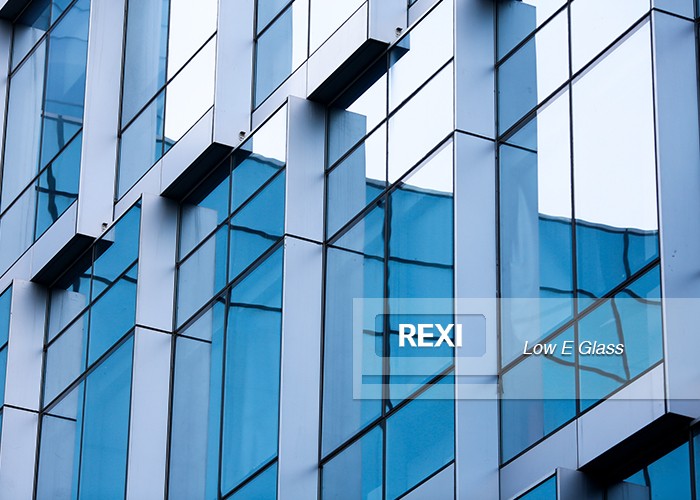
Modern architecture—whether commercial towers or residential blocks—increasingly favors floor-to-ceiling glazing. Ordinary clear glass, however, offers no control over solar gain or far-infrared heat flux: the larger the glazed area, the more heat floods in during summer and leaks out in winter. To break this energy penalty, the market turned to coated “energy-saving” architectural glass.
Product Details
Modern architecture—whether commercial towers or residential blocks—increasingly favors floor-to-ceiling glazing. Ordinary clear glass, however, offers no control over solar gain or far-infrared heat flux: the larger the glazed area, the more heat floods in during summer and leaks out in winter. To break this energy penalty, the market turned to coated “energy-saving” architectural glass.
Coated glass falls into two broad families: solar-control (reflective) coatings and low emissivity (Low E) coatings. Solar-control glass—often called reflective or sun-control glass—works by bouncing away a slice of the solar spectrum. On curtain walls, it delivers brilliant façades and deep color, cutting cooling loads modestly. Yet it does little to stop long-wave infrared radiation, so heat still rides the IR wave straight through the pane.
Only Low E glass, with its low-emissivity surface, can block far-IR radiant heat while still tailoring incoming sunlight. A Low E surface radiates weakly, absorbing and re-emitting little energy; its infrared reflectance is high, flinging heat back to where it came from; and its visible-light transmittance can be dialed to balance daylighting. For these reasons, Low E is regarded worldwide as the optimum window material.
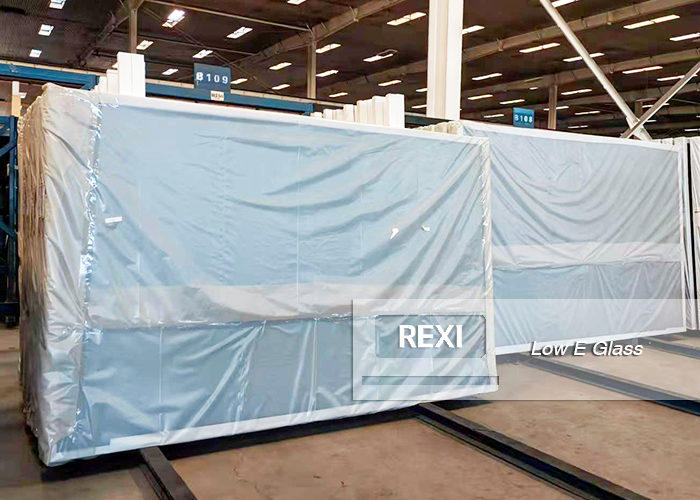
Low E glass is produced in two ways: on-line (pyrolytic hard-coat) and off-line (sputtered soft-coat).
Off-line Low E relies on ultra-thin silver layers that strongly reflect near- and mid-IR solar energy. Counting the silver stacks gives single-silver, double-silver, and triple-silver grades.
According to whether the coating survives a toughening furnace, we further classify it as temperable or non-temperable Low E.
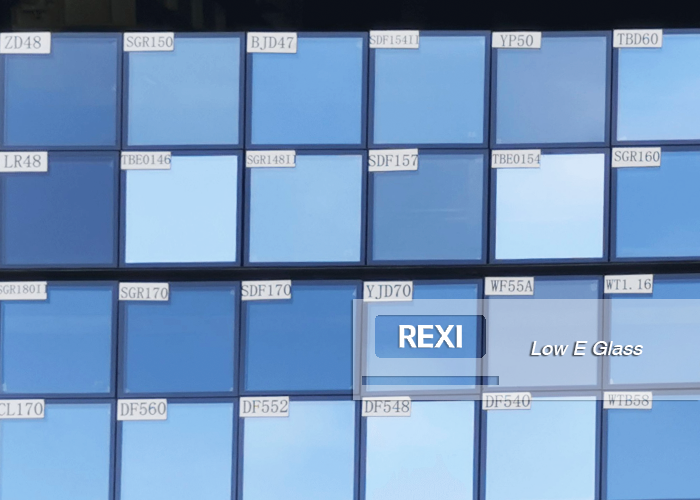
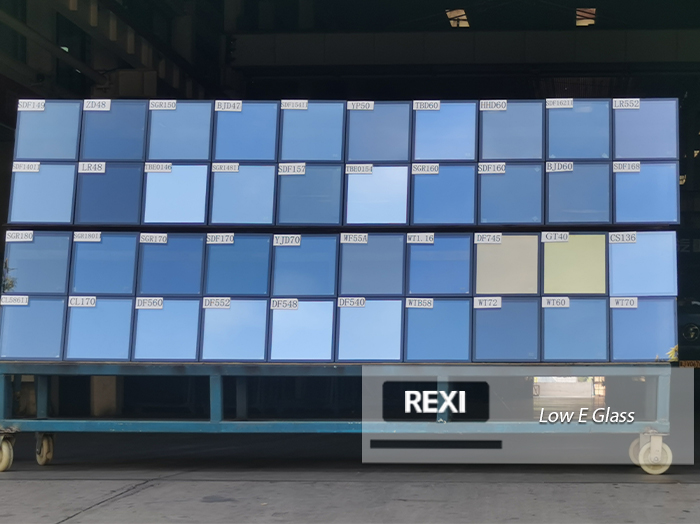
Thanks to flexible stack design, Off-line Low E glass can be produced in a wide range of colors—high-transmission neutrals, blues, greens, grays, or golds—while the glass itself remains transparent.
With its inherently low emissivity and silver-based stacks, Low E is almost always fabricated into insulating glass units. The resulting IGU multiplies the thermal barrier, keeping curtain walls and windows warmer in winter and cooler in summer.
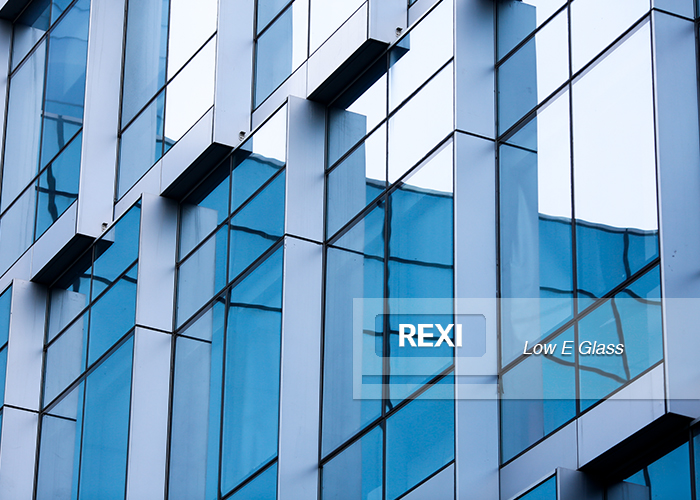
Low E coated insulating glass combines the benefits of both coating and insulation technologies. It not only controls direct solar radiation but also significantly limits heat transfer through convection and conduction.
Low E insulating glass offers lower U-values, a wider range of shading coefficients (Sc), and high visible light transmittance. In winter, it effectively prevents the escape of indoor heat—such as that from heating systems and human activity—through thermal radiation. In summer, it blocks external heat radiation from roads and buildings from entering the interior. This ability to restrict radiant heat transfer is independent of the season. In other words, Low E insulating glass is one of the best transparent insulating materials available.


